
From visible light exposure to small imbalances in your skincare rhythm, radiance can fade in ways that are easy to miss at first. It often shifts quietly, shaped by sun exposure, pollution, and screen light that slowly wear down skin’s natural defenses.
When radiance changes this gradually, structured routines matter more than quick fixes. GlamourTip’s glow-forward routines aren’t built on intensity. They’re built on steady support, with antioxidants playing a central role in maintaining balance and helping skin stay consistent over time.
This guide breaks down the best antioxidants for radiant skin, how they work across different formulas, and where they fit within your glow-forward routine. Together, these ingredients help refine balance, consistency, and long-term radiance.

*Some links in this glossary are affiliate links, which means we may earn a small commission if you choose to shop through them — at no extra cost to you. As an Amazon Associate, we earn from qualifying purchases. Thank you for supporting GlamourTip.
Quick Guide: Building An Antioxidant Routine For Radiance:
A glow-forward antioxidant routine is built around steady support, thoughtful layering, and long-term consistency:
IN PRACTICE:
- Keep antioxidants in your routine consistently, not just during flare ups
- Apply lighter formulas before richer textures
- Look for complementary pairings, such as vitamin C with vitamin E
- Balance plant-based and barrier-supporting antioxidants
- Choose formulas that integrate easily into daily care
No. 1
How Free Radicals Affect Radiant Skin (and Why Antioxidants Help)
When glow starts to slip, free radicals are often already in the background.
Free radicals don’t show up on the surface — but over time, their buildup can shift how your skin looks and feels. Formed in response to everyday exposure like light, pollution, and friction, these unstable molecules aren’t dramatic, but they can slowly chip away at tone, clarity, and balance.
This is one reason the best antioxidants for radiant skin aren’t about intensity. They’re about consistency. In glow-forward routines, antioxidants help support daily protection and long-term rhythm — keeping small disruptions from turning into visible changes1. Vitamin C often becomes the first step in that process, reframing basic morning care as quiet, stabilized support rather than constant correction.
That’s what makes the best antioxidants routines less about quick fixes — and more about maintaining long-term stability.
Glow Mechanics: Free Radical & Radiance
| Everyday Exposure | Where It Shows Up | How It Shapes Radiance |
|---|---|---|
| Sunlight & Screens | Overall smoothness | Can dull visible clarity |
| Pollution & Air | Daily comfort | Disrupts tone over time |
| Friction & Touch | Texture resilience | Affects smoothness |
| Stress & Fatigue | Skin rhythm | Impacts consistency |
Why it matters
When left unchecked, free radical exposure can interfere with the glow you’ve worked so hard to build. Antioxidants don’t erase that exposure, but they offer a layer of consistency that helps skin stay even, especially when the environment isn’t.
This is where routines shift from doing the bare minimum to moving forward with intention — refining what already supports your glow.
GLOW TIP Start your morning with a water-based antioxidant serum — such as one featuring vitamin C — to prep skin before exposure to light, air, and daily friction.
GlamourTip PICK
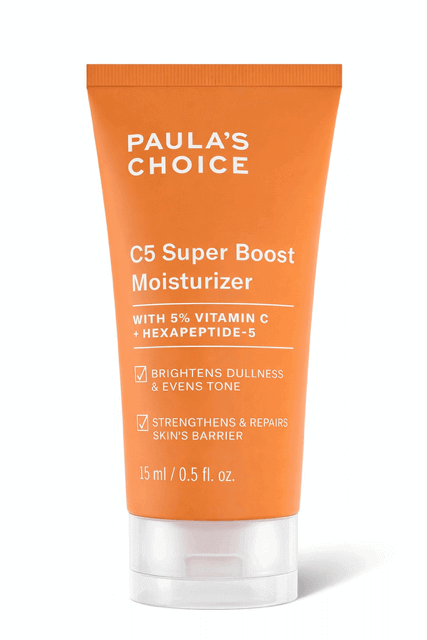
➢ Paula’s Choice C5 Super Boost Face Moisturizer
A lightweight gel-cream formulated with 5% stabilized vitamin C, vitamin E, and barrier-supporting peptides. Designed to layer smoothly under sunscreen, it delivers daily antioxidant support without heaviness, making it ideal for refined, glow-forward morning routines.
No. 2
The Best Antioxidant Ingredients for Glowing Skin (Beyond Vitamin C)
Vitamin C is the entry point — but most refined routines don’t rely on it alone.
When antioxidant support is treated like a single-step fix, routines tend to lean too heavily on one ingredient. But skin doesn’t function in isolation — and neither should your routine. The best antioxidants for radiant skin work as a system, with different ingredients contributing to tone, comfort, and surface balance in complementary ways.
- Vitamin E helps reinforce surface stability and supports formulas designed for long-term use
- Niacinamide helps maintain visible balance and integrates easily into daily routines
- Licorice Root supports even-looking tone when skin feels unsettled
Rather than competing with vitamin C, these ingredients tend to work quietly alongside it. When used with intention, they support tone, comfort, and consistency — making radiant skin easier to maintain overtime2.
Why it matters
Relying on a single antioxidant can leave routines feeling inconsistent as skin, climate, and schedules shift. Ingredients like vitamin E, niacinamide, and licorice root help create continuity across different steps and textures — allowing routines to stay steady even when individual products change. This layered support is what helps refined routines hold their balance over time.
GLOW TIP Alternate your antioxidant formulas throughout the day — for example, a niacinamide-rich serum in the morning and a vitamin E-rich moisturizer in the evening — to support balance without overloading any single step.
GlamourTip PICK
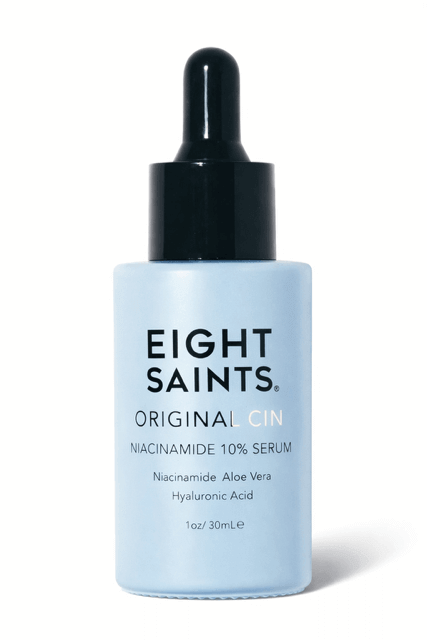
➢ Eight Saints Original Cin, 10% Niacinamide Serum For Face
Formulated with 10% niacinamide, hyaluronic acid, and aloe-based botanical extracts, this lightweight serum supports balanced routines when layered with antioxidant-rich moisturizers. Its fast-absorbing texture integrates easily into refined, ingredient-driven systems without disrupting existing steps.
No. 3
Plant-Based Antioxidants That Help Brighten and Even Skin Tone
The quietest ingredients in your routine are often the ones doing the most behind the scenes.
You don’t need aggressive actives to support visible clarity — especially when plant-based antioxidants are already working in the background. Ingredients like polyphenols and resveratrol, often sourced from calming botanicals like green tea and grapes, may not have the same name recognition as vitamin C, but they’re still known in glow-forward routines for their ability to support tone and surface comfort over time.
These ingredients don’t rely on dramatic formulas or high concentrations. Instead, they tend to appear in essences, toners, and lightweight serums that layer easily and integrate without disrupting existing steps. Their value lies in consistency — helping routines stay balanced when skin feels dulled by stress, seasonal shifts, or routine changes.
These plant-derived ingredients made our list of best antioxidants for radiant skin for their ability to provide stability when routines need support — not stimulation.
Why it matters
When routines feel overstimulated or uneven, plant-based antioxidants offer a way to recalibrate without pulling back entirely. By supporting tone and comfort through gentle, repeatable use, they help refined routines stay responsive instead of reactive.
GLOW TIP Look for polyphenol- or resveratrol-rich formulas in essences, toners, or fluid serums — these formats are easiest to layer when skin needs quiet support rather than added intensity.
GlamourTip PICK
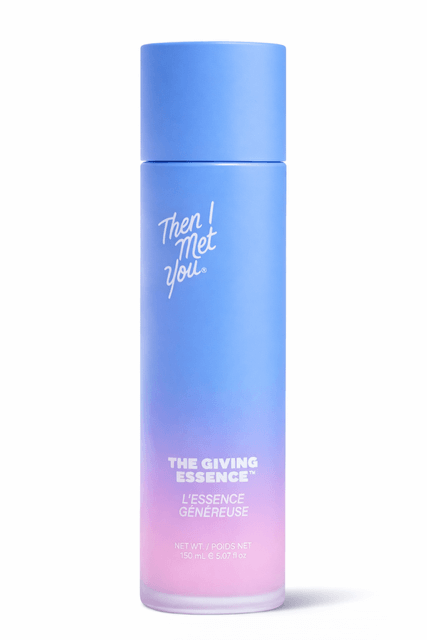
➢ Then I Met You The Giving Essence
Formulated with fermented botanicals and polyphenol-rich extracts, this watery essence layers between toner and serum to reinforce balanced routines. Its lightweight texture makes it especially suited for routines focused on maintaining even tone and surface comfort over time.
No. 4
Glutathione and CoQ10: Antioxidants That Help Maintain Skin Balance
These aren’t the flashiest ingredients — but are often the most noticeable when missing.
Some of the best antioxidants for radiant skin don’t try to stand out. Instead of delivering instant brightness or dramatic shifts, ingredients like glutathione and CoQ10 focus on maintaining rhythm — supporting routines when skin feels fatigued, inconsistent, or slightly out of sync.
These antioxidants are often built into recovery serums, nourishing creams, and facial oils designed for long-term use. Rather than acting as focal points, they help routines stay functional during periods of travel, stress, seasonal change, or over-layering.
Within refined systems, glutathione and CoQ10 often serve as stabilizers — reinforcing what already works instead of introducing something new.
Why it matters
When routines feel fragile, adding more actives isn’t always the answer. Glutathione and CoQ10 support continuity by helping skin remain comfortable and balanced during periods of disruption. This steady presence allows routines to adapt without needing constant resets.
GLOW TIP Introduce glutathione or CoQ10 into your routine during travel weeks, seasonal transitions, or periods of routine fatigue — especially when skin feels uneven but not reactive.
GlamourTip PICK
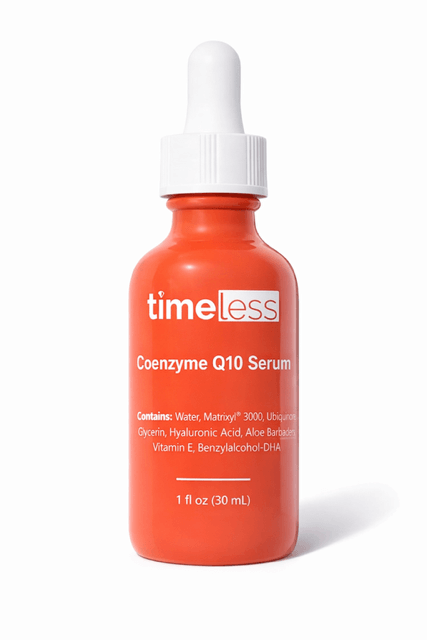
➢ Timeless Skin Care Coenzyme Q10 Serum
Built around a focused, low-interference formula, this serum centers on CoQ10 rather than blending dozens of competing actives. Its streamlined composition allows the antioxidant to sit comfortably on the skin without heaviness, making it especially useful during periods when routines benefit from clarity and simplicity.
No. 5
How to Layer Antioxidants in Your Skincare Routine for Radiance
It’s not just what you use — it’s when and how.
The best antioxidants for radiant skin don’t work in isolation — and they don’t need to appear all at once. Refined routines are built around spacing, texture, and timing, allowing different antioxidants to support the skin without competing for attention.
Rather than stacking every ingredient into a single step, glow-forward systems distribute support across the day and week. Lighter, water-based formulas tend to fit more naturally into morning routines, while richer antioxidant blends often perform best in evening recovery steps. This approach keeps routines flexible, comfortable, and easier to maintain long term.
When antioxidants are treated as part of a rhythm — not a checklist — they become more sustainable and more effective within real life routines.
A Simple Antioxidant Layering Rhythm
Overloading multiple antioxidants into one step can make routines feel inconsistent and harder to commit to. Layering them with intention allows each ingredient to support the skin in its ideal format and timeframe, helping routines remain balanced even as products rotate.
Morning (Defense & Support)
- Vitamin C — serums under SPF
- Niacinamide — lightweight hydrators
Evening (Recovery & Reinforcement)
- Vitamin E — moisturizers, cream textures, or overnight balms
- Resveratrol — antioxidant blends in serums or recovery formulas
- CoQ10 & Glutathione — nourishing creams or facial oils
Flexible Layers (Any Time)
- Licorice Root — soothing moisturizers or brightening emulsions
- Polyphenols — toners, essences, or fluid serums
Spacing antioxidants throughout the routine makes them easier to tolerate, easier to commit to, and more likely to support consistent-looking skin over time.
Final Thoughts: Best Antioxidants for Radiant Skin: Ingredients That Support A Glow-Forward Routine
Understanding the best antioxidants for radiant skin isn’t about finding a single “hero” ingredient — it’s about learning how different forms of support work together over time. From foundational defense to refined layering and recovery-focused care, this approach reflects how real routines evolve in practice. At GlamourTip, this perspective centers on building systems that feel intuitive, adaptable, and sustainable — allowing radiance to develop through consistency rather than complexity.
Continue Your Glow Path
Current Stage: Awareness (III) · Understand
START HERE
Awareness (I) · Discover

EXPLORE ON
Awareness (II) · Learn
START HERE
Balance (II) · Stabilize
Why Your Vitamin C Isn’t Making Your Skin Look Brighter — And What to Adjust
Glow doesn’t end here — it evolves. Keep building it, your way.
- Debacq-Chainiaux F, Leduc C, Verbeke A, Toussaint O. “UV, stress and aging.” Dermato-Endocrinology, 2012. ↩︎
- Lin, Fu-Hsiung et al. “Ferulic acid stabilizes a solution of vitamins C and E and doubles its photoprotection of skin.” The Journal of Investigative Dermatology, 2005 ↩︎