
Brightening rarely fails dramatically. More often, it underperforms quietly — tone looks unchanged, texture feels flat, or glow fades by midday. Even consistent vitamin C use can stall when placement, pairing, or timing aren’t aligned with the rest of the routine.
At GlamourTip, vitamin C isn’t treated as a standalone solution. It functions within a system — interacting with hydration, barrier condition, moisturizer weight, and sun exposure. When brightness plateaus, the issue is usually structural, not ingredient-based.
Why your vitamin C isn’t making your skin look brighter often comes down to adjustment rather than replacement. This guide refines how vitamin C is layered, timed, and supported so it works in harmony with the rest of your glow-forward routine — not against it.
*Some links in this post are affiliate links, which means we may earn a small commission if you choose to shop through them — at no extra cost to you. As an Amazon Associate, we earn from qualifying purchases. Thank you for supporting GlamourTip.
Quick Guide: Why Your Vitamin C Isn’t Making your skin look brighter
Vitamin C supports brightness when placement, skin condition, moisturizer weight, and sun protection are aligned within the routine.
In Practice:
- Apply vitamin C after cleansing and before heavier creams
- Use on fully dry skin if uneven tone or sensitivity appear
- Adjust moisturizer weight if brightness looks muted
- Check barrier condition when results feel inconsistent
- Maintain daily SPF to preserve visible clarity
No. 1
Vitamin C Application Order: Why Placement Matters
Layering sequence influences how evenly vitamin C absorbs and wears.
Vitamin C is typically positioned early in the routine, but exact placement still shapes how it performs. Applied immediately after cleansing, it has direct contact with the skin before heavier textures are introduced. When layered too late — over dense creams or occlusive steps — absorption can feel uneven and finish may appear dull rather than clear.
Placement also affects how vitamin C interacts with hydration layers. Lightweight formulas settle differently depending on what sits beneath them. When sequencing is intentional, brightness appears more consistent throughout the day rather than fading by midday.
Why it matters
Even a well-formulated vitamin C serum can underperform if it’s positioned after heavier textures. Strategic placement allows the ingredient to integrate smoothly before moisturizer weight influences how it sets, helping visible brightness look steady rather than short-lived.
GLOW TIP If brightness seems inconsistent, apply vitamin C directly after cleansing and allow it to absorb fully before introducing hydration or cream layers. Small shifts in order often refine results without changing formula.

GlamourTip PICK
➢ Obagi Medical Professional-C Vitamin C Serum
A lightweight L-ascorbic acid serum designed for early placement in the routine. Its fluid texture absorbs quickly on clean, dry skin, making it well suited for layering before hydration and moisturizer weight are introduced.
No. 2
Applying Vitamin C on Damp vs Dry Skin: What Changes
Skin conditions at application can subtly shift how a formula settles.
Vitamin C can feel differently depending on whether the skin is fully dry or slightly damp. On dry skin, the formula tends to set more precisely, creating controlled finish that feels consistent throughout the day. On damp skin, spreadability increases – but so can variation in how evenly the serum integrates.
Neither approach is inherently wrong. The distinction lies in how the routine behaves afterward.
When skin is fully dry
Applying vitamin C to dry skin allows the formula to set directly on the surface without added moisture. This often results in a clearer finish and more predictable interaction with subsequent layers.
When skin is slightly damp
A slightly damp surface can increase slip and make the serum easier to distribute. However, if layered too quickly, brightness may appear softer or less defined once moisturizer is introduced.
Why it matters
How evenly brightness appears often depends on how the formula settles before additional textures are layered. Small shifts in how the formula settles can influence how evenly radiance appears across the day — especially when moisturizer weight or SPF follows.
GLOW TIP If radiance looks diffused rather than defined, adjust surface condition before adjusting the formula. Apply vitamin C serum to fully dry skin when you want a clearer, more consistent finish, and to slightly damp skin when you prefer a softer glow.

GlamourTip PICK
➢ Sunday Riley C.E.O. 15% Vitamin C Brightening Serum
This cream-textured vitamin C serum spreads with more cushion than water-light formulas, making surface condition especially noticeable at application. On dry skin, it sets with greater definition; on slightly damp skin, it diffuses more softly. The consistency makes it a useful reference point when refining how absorption influences visible radiance.
No. 3
Vitamin C Before or After Moisturizer?
Moisturizer weight and timing shape how vitamin C integrates.
Moisturizer weight influences how vitamin C integrates within the routine. Even when the formula is well chosen, the density and timing of the cream that surrounds it can shift how radiance appears. When brightness feels softer than expected, texture reaction is often the variable worth refining.
Layering Vitamin C before moisturizer
- Works best with lightweight, water-based or fluid serum textures
- Allows the formula to set on the skin before heavier creams are introduced
- Maintains clearer, more defined radiance under SPF
Layering vitamin C after moisturizer
- Suits cream-based, gel-cream, or emulsion vitamin C formulas
- Integrates more seamlessly when layered within richer textures
- Softens the overall finish into a diffused glow
Why it matters
Visible radiance is influenced by how texture distributes light across the skin. When vitamin C is paired with incompatible cream weight, brightness can look softened rather than sharpened. Refining texture alignment can help radiance appear intentional rather than incidental.
GLOW TIP When working with a vitamin C cream, allow it to function as your primary moisturizer rather than layering a separate dense cream on top. Preserving its texture often keeps brightness more intentional and less diffused.

GlamourTip PICK
➢ Dr Dennis Gross Vitamin C Plus Lactic Dewy Deep Cream
A cream-based vitamin C formula that combines brightening ingredients with lactic acid, niacinamide, squalane, and ceramides in a visibly dewy base. The richer texture makes its placement within the routine especially noticeable, making it a strong reference point when refining how cream weight influences surface radiance.
No. 4
When Skin Barrier Conditions Affect Vitamin C Results
An unsettled barrier can change how vitamin C appears on the surface.
When skin feels tight, reactive, or inconsistent from day to day, brightness may look uneven — not because the formula is ineffective, but because the base it’s sitting on isn’t steady.
Barrier imbalance doesn’t always show up as irritation. Sometimes it presents as fluctuating radiance, patchy clarity, or results that seem to disappear quickly. Vitamin C relies on a balanced surface to distribute evenly and maintain visible radiance throughout the day.
Stability first. Brightness second.
Why it matters
When the skin barrier is compromised or overstimulated, absorption patterns shift and texture settles unpredictably. Refining barrier support often restores clarity without changing the vitamin C itself, helping radiance appear more consistent overtime.
GLOW TIP Pause active layering for several days and focus on barrier-supportive hydration and moisturizer weight before reintroducing vitamin C. A steadier surface tends to restore visible radiance more effectively than increasing strength.
GlamourTip PICK
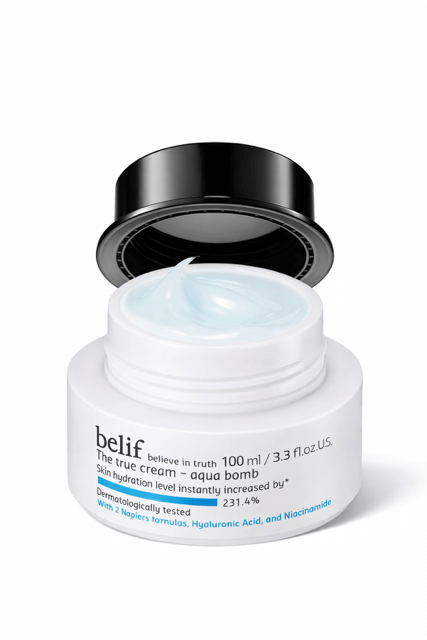
➢ belif Aqua Bomb – Daily Niacinamide Hydrating Moisturizer
A lightweight gel-cream moisturizer known for its water-based texture and breathable finish. Its hydrating base helps steady the skin’s surface without adding heaviness, making it a useful option when refining barrier balance so vitamin C integrates more evenly and radiance appears more consistent.
No. 5
Do You Need Sunscreen With Vitamin C for Visible Brightness?
Daily sun exposure can impact how brightness maintains over time.
Ultraviolet radiation is associated with visible changes in tone and photoaging1, which means protection plays a role in how consistent radiance looks from day to day. Even when vitamin C is layered carefully within the routine, SPF addresses a different part of the equation.
Vitamin C and sunscreen function differently but complement each other. While vitamin C supports visible brightness within the routine by addressing environmental stressors like free radicals, sunscreen helps reduce UV exposure at the surface1. Without daily protection, results can feel less steady across seasons and environments.
Why it matters
When brightening seems to fluctuate despite consistent use of vitamin C, unfiltered UV exposure can be part of the broader context. By anchoring morning routines with SPF, layers that follow are more likely to interact predictably, keeping visual outcomes aligned with expectations.
GLOW TIP Make sunscreen application a consistent final morning step. A uniform layer of SPF can help create the visual baseline upon which daytime adjustments (like antioxidants) make sense.

GlamourTip PICK
➢ EltaMD UV Clear Face Sunscreen SPF 46
A weightless daily sunscreen that layers smoothly over vitamin C and moisturizer without disrupting texture flow. Its breathable consistency compliments routine structure while providing broad-spectrum coverage suitable for everyday wear.
Final Thoughts — Why Your Vitamin C Isn’t Making Your Skin Look Brighter — And What to Adjust
When vitamin C doesn’t deliver the brightness you expect, the solution isn’t to immediately switch formulas. Small shifts in how the formula is placed within the routine — and whether daily protection supports it — often influences how consistent brightness appears.
At GlamourTip, refinement always comes before replacement. When the routine is balanced and steady, brightness begins to feel consistent instead of fading in and out.
Continue Your Glow Path
Current Stage: Balance (II) · Stabilize
START HERE
Awareness (III) · Understand

EXPLORE ON
Balance (II) · Stabilize

Lightweight Hydration Routine for Oily & Combination Skin: How to Stay Dewy Without Grease
LEVEL UP
Enhancement (I) · Upgrade
The Glow List: Best Vitamin C Serums for Dull, Uneven Skin Tone — Spring and Beyond
Glow doesn’t end here — it evolves. Keep building it, your way.
- Flament, F., Bazin, R., Laquieze, S., Rubert, V., Simonpietri, E., & Piot, B. “Effect of the sun on visible clinical signs of aging in Caucasian skin.” Clinical, cosmetic and investigational dermatology, 2013 ↩︎