
Barrier repair refers to the routine adjustments and product choices often used when the skin barrier already feels compromised. It focuses on stabilizing the surface after visible shifts in comfort — such as dryness, warmth, or reactivity — often influenced by over-exfoliation, environmental stress, or inflammation. These repair-focused measures aim to bring the routine back to a regular glow-forward rhythm.
While barrier support helps keep the barrier steady day-to-day, barrier repair is used in moments when the routine needs temporary recalibration. It commonly centers on humectants, emollients, and barrier-reinforcing textures that feel comfortable on stressed skin, along with gentler pacing across cleansing and exfoliation.
*Some links in this edit are affiliate links, which means we may earn a small commission if you choose to shop through them — at no extra cost to you. As an Amazon Associate, we earn from qualifying purchases. This content is for informational purposes only; please consult a professional before making changes to your routine.
How Barrier Repair Fits Into A Skincare Glow Routine
In a glow-forward skincare routine, barrier repair plays the role of recalibrating the surface when the skin barrier feels compromised.
- LAYERING — Barrier repair often calls for fewer layers while the skin feels compromised. This is where mid-weight creams, cushions of moisture, or products containing ceramides can feel more fitting than complex stacks.
- TEXTURE & FORMAT — Repair-focused routines lean toward creamier emulsions, balms, and occlusives that sit predictably on stressed skin. These formats help create a sense of stability when lighter gels or active-forward formulas feel too disruptive.
- PAIRING — Product pairing becomes simpler during repair, often combining humectants with emollient-rich layers while temporarily reducing active-focused steps. These pairings help prevent the routine from leaning on steps that may add unnecessary friction or overstimulation.
- ROUTINE FIT — Barrier repair typically enters the routine after periods of over-exfoliation, seasonal shifts, or visible reactivity. During this time, the focus often shifts from active-heavy routines to simpler, comfort-first steps until the skin feels ready for its usual routine again.
Why We Love Barrier Repair For Glow
Barrier repair helps restore comfort when the skin starts feeling dry, reactive, tight, or unusually sensitive. It often means simplifying the routine, reducing exfoliation, and relying on moisturizers, creams, ceramides, and gentler barrier-focused formulas while the skin recovers.
As the skin barrier regains stability, hydration tends to feel easier to maintain and everyday products are less likely to cause discomfort. This recovery period helps the skin return to a healthier baseline before more active or intensive routines are introduced.
GLOW MOMENT
When your skin starts feeling tight, reactive, or unusually sensitive, consider treating the next few days as a recovery period rather than pushing though with the rest of your routine. Simplifying active-heavy steps and leaning on barrier-focused formulas can often help the skin feel more comfortable while it regains its balance.
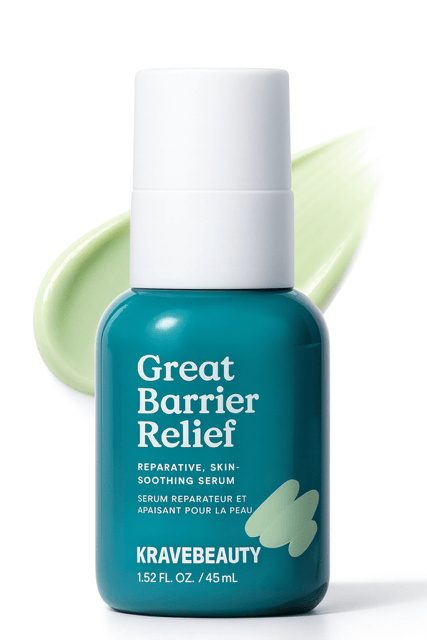
A creamy emulsion with a softly cushioned feel that settles comfortably onto stressed or overworked skin. The blend of tomanu oil and ceramides gives the formula a balanced, mid-weight texture that integrates easily into repair-focused routines without overwhelming other steps. This serum-lotion hybrid layers smoothly under moisturizers or stands alone when the skin barrier needs a quieter lineup.
FAQ
What ingredients are commonly used for barrier repair in skincare?
Barrier repair formulas often feature ceramides, occlusives, fatty acids, and emollient-rich textures that sit comfortably on stressed skin. These ingredients are chosen for how they create a steadier surface when the skin barrier feels compromised.
How can I tell when my routine might benefit from a barrier repair phase?
A repair phase may be helpful when daily steps start to feel too active or when layering becomes harder to navigate. Moments of visible dryness, warmth, or reactivity can signal that the routine may need quieter, low-friction layers for a short period.
What does a barrier repair routine usually look like?
Barrier repair routines are often shorter and simpler than your usual lineup, temporarily prioritizing barrier-focused moisturizers, emulsions, and other comfort-first formulas until the skin feels more settled.
How is barrier repair different from barrier support in a skincare routine?
Barrier support is ongoing maintenance, while barrier repair is a temporary recovery phase used when the skin feels compromised. Repair phases usually feature creamier formats, gentler pacing, and intentional pairings until the routine feels stable again.
For a more balanced, refined finish across different conditions, explore the Luster Selection.
Continue Your Glow Path
Current Stage: Awareness (I) · Discover

EXPLORE ON
Balance (II) · Stabilize

LEVEL UP
Enhancement (I) · Upgrade

Glow doesn’t end here — it evolves. Keep building it, your way.